
UNDERSTAND & PREEMPT
Turn noise into actions
The Totogi Ontology aligns entities, logic and state across systems, so decisions are grounded against a single, consistent view of the business.
The result is semantic observability: leaders and teams can act on the same reality – and AI acts with confidence.

From data visibility to semantic observability
CSPs are not short of BI tools and data lakes. But estates are siloed: each system has its own keys, entities, and definitions. Every dataset tells a partial story, so insight requires manual reconciliation – and often remains hidden. The Totogi Ontology aligns entities, logic, and actions across systems, creating one governed, executable view of the telco.

One version of truth across domains
Consistent entities, logic and actions across BSS, OSS, and Network,

AI that survives contact with reality
Recommendations grounded in telco semantics, constraints, and valid operations instead of generic dashboards.

Earlier detection of leakage and fallout
Identify gaps between intent, fulfillment, and billing before they impact revenue and customer experience.

Faster root-cause analysis and prioritization
Less debate, less spreadsheet correlation, and more decisions based on business impact.

Closed-loop execution
Turn insight into governed next steps – and, where appropriate, write back into systems of record.
IF AI IS GOING TO TAKE ACTIONS, THE UNDERLYING TRUTH CAN’T BE NEGOTIABLE

A single source of (AI)
truth that holds up in
the real world
The Totogi Ontology produces a unified, consistent digital twin of your telco business, making insights reliable across domains – and AI safe enough to move from analysis to action:
- Cross-system alignment of entities, business logic and actions.
- Traceability from symptom → cause → impacted systems → recommended actions
- Recommendations grounded in what’s actually true and executable inside the operator’s environment.



Start with one high-stakes
business problem
You don’t need to start with a massive transformation.
Start with one high-impact question: deal execution, order fallout, revenue leakage,
or even cross-system reporting disputes.
We’ll show you how the Totogi Ontology solves this.
Discover more telco insights
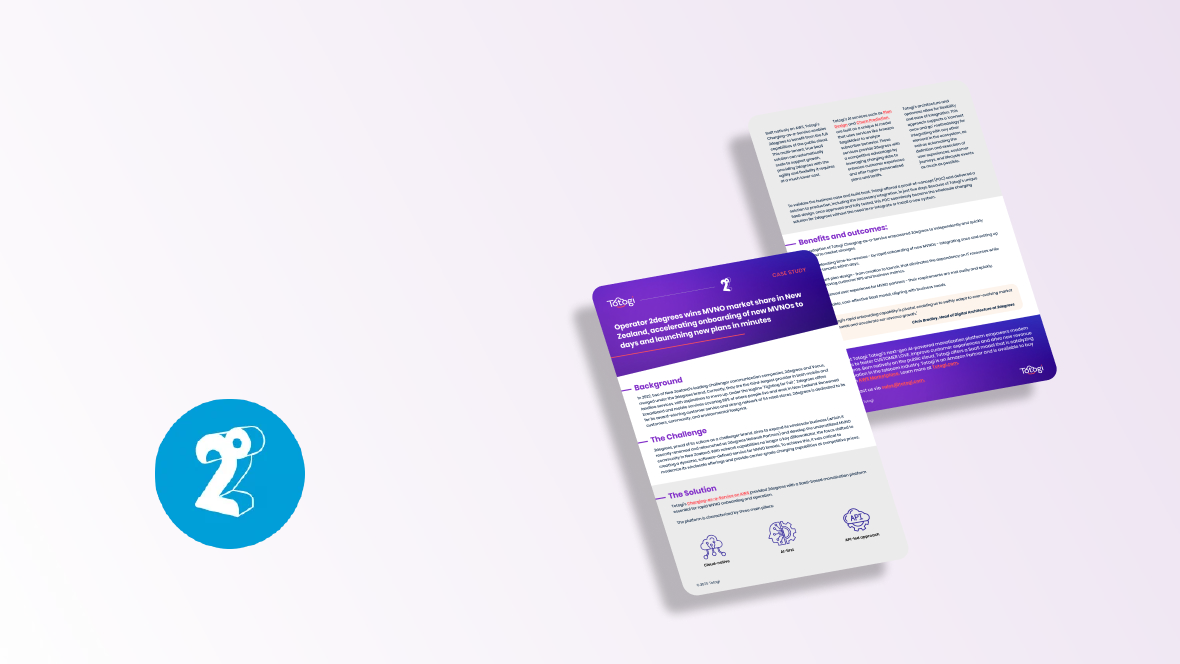
2degrees wins MVNO market share in New Zealand with Totogi
READ MORE about 2degrees wins MVNO market share in New Zealand with Totogi
Accelerate wholesale revenue with the Totogi Wholesale BSS Platform
READ MORE about Accelerate wholesale revenue with the Totogi Wholesale BSS Platform
Turn noise into actions with the Totogi Ontology
See executable semantics in action
Frequently asked questions
FAQs
Semantic observability means you’re not just seeing data—you’re seeing it with a shared, governed meaning across BSS, OSS, and network systems. Instead of every domain telling a different “partial story,” the Totogi Telco Ontology aligns entities, logic, and state so leaders and teams act on the same reality—and AI can act with confidence. That’s the shift from dashboards to decisions: fewer debates about what’s true, faster agreement on what matters, and clearer accountability for where issues originate and how they propagate across the estate.
Because the hardest part isn’t storage or reporting—it’s meaning. Telco estates are siloed: every system has its own keys, entities, and definitions, so each dataset tells only part of the story and insights require manual reconciliation (and often stay hidden). The Totogi Telco Ontology addresses the root cause by aligning entities, logic, and actions across systems into one governed, executable view of the telco—so analysis and decisions are grounded in a single source of truth, not negotiated interpretations.
It connects the dots across domains. The ontology aligns cross-system entities and operational state, then adds the missing piece most analytics stacks lack: actionability. Instead of a dashboard alert that triggers a war room, you get governed next steps—traceable from symptom → cause → impacted systems → recommended actions—grounded in what is true and executable in your environment. Where appropriate, it can support closed-loop execution and write-back into systems of record, collapsing the “insight-to-action” gap.
It’s broader than “customer 360.” It is about consistent entities, logic, and actions across BSS, OSS, and Network—so the same customer, product, order, balance, session, or alarm means the same thing across systems, and the permitted operations on them are consistent too. This is what lets teams stop spreadsheet-correlating across silos and instead prioritize based on real business impact (revenue, NPS, fallout risk), with far fewer disputes about whose data is correct.
AI fails in telco when context is fragmented. Totogi’s approach is to ground recommendations in telco semantics, constraints, and valid operations, not generic dashboard patterns. That’s why the page emphasizes “AI that survives contact with reality”: AI can only act safely when it understands the meaning behind data and what actions are actually executable across your stack. An ontology acts like “telco DNA,” giving AI the context it needs from day one and reducing “context chaos.”
By aligning intent, fulfillment, and billing signals across systems so gaps become visible before they hit revenue or customer experience. The page explicitly calls out earlier detection of leakage and fallout—because the ontology exposes inconsistencies between what should have happened and what actually happened across domains. Practically, that means spotting broken journeys, systemic failures, and leakage patterns without waiting for end-of-month finance reconciliation or a spike in complaints.
It means fewer war rooms built on competing definitions. With semantic consistency, teams can trace issues across impacted systems and prioritize based on business impact instead of arguing over metrics. The page positions this as “less debate, less spreadsheet correlation,” and more decisions grounded in a governed view of the telco. In practice, root cause becomes repeatable: symptoms map to correlated events and propagation patterns across domains, so teams can focus on fixing the underlying failure mode—not just the loudest alert. loop execution is the step after insight: turning findings into governed next steps—and, where appropriate, writing outcomes back into systems of record. Not every operator will want autonomous write-back on day one, but the ontology enables a safe progression: start with recommendations and approvals, then move toward automation as confidence, auditability, and guardrails mature. The key idea is that AI value is realized only when insights trigger coordinated action across systems—not when they sit in reports.
Yes. Totogi Ontology is the evolution of what we originally called BSS Magic. We renamed it because the product now spans BSS, OSS, and core/network domains – not just BSS. The underlying approach is the same: an executable telco ontology (semantic layer) that unifies meaning and decision logic across systems so AI can reason and act reliably end-to-end.
Note: Older assets may still use the name “BSS Magic.” Those should be read as “Totogi Ontology.”